
Kenya’s entry into commercial oil production is bringing renewed attention to the country’s petroleum ambitions, but the start of drilling in Turkana also raises questions about environmental protection, community benefits and its commitment to a low-carbon economy.
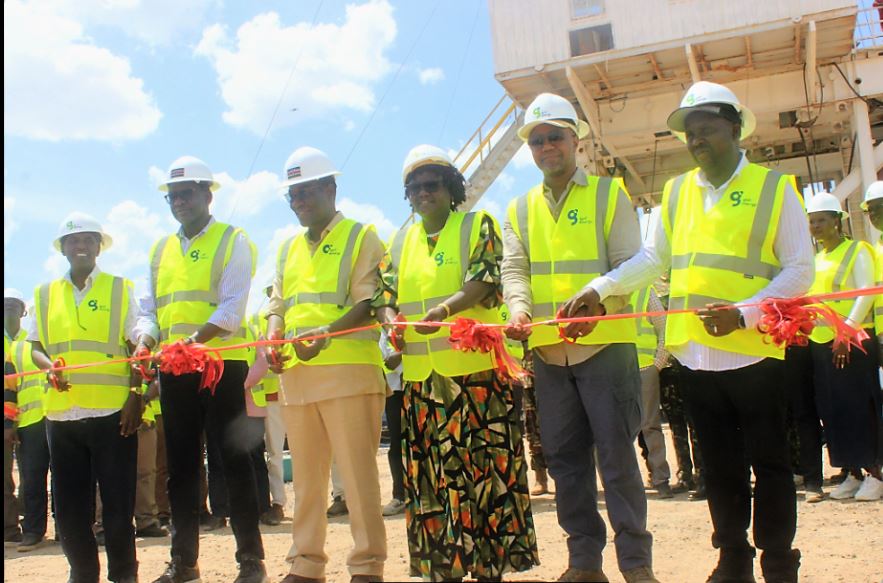
The official spudding of Gulf Energy’s Amosing 1 well in the South Lokichar Basin marks a new phase in the development of Kenya’s oil resources. The company is targeting initial production of more than 20,000 barrels per day, with first oil expected from December 1, 2026.
The development comes as Kenya expands its petroleum ambitions beyond extraction. In September, the government launched the proposed Dangote East Africa Petroleum and Petrochemicals project in Lamu, which includes a planned refinery with a capacity of 700,000 barrels per day.
Together, the projects signal Kenya’s ambition to become a regional petroleum and industrial hub. However, they also raise a fundamental sustainability question: can the country exploit its natural resources while protecting communities, ecosystems and its climate commitments?
Governing the environmental and social costs
Oil extraction in Turkana presents significant environmental considerations, particularly water consumption in an already water-stressed region. Drilling waste, wastewater management, methane emissions and the risks associated with transporting crude oil also require effective safeguards.
In Lamu, the proposed refinery introduces additional concerns around coastal ecosystems, fisheries, water availability, land acquisition and community livelihoods. The project’s environmental and social impacts will require transparent assessment, meaningful public participation and independent regulatory oversight.
The social benefits also need scrutiny. While petroleum development promises employment, infrastructure and business opportunities, these benefits are not automatic. The government and investors must demonstrate how local communities will participate in the emerging oil economy and benefit from the revenues generated.
For both projects, responsible resource governance must extend beyond licensing to continuous environmental monitoring, public disclosure and accountability for social and environmental impacts.
Oil expansion versus green energy ambitions
Kenya’s growing petroleum industry also presents a policy challenge. The country has established itself as a regional leader in renewable electricity, drawing substantially on geothermal, hydro, wind and solar resources.
Under its Second Nationally Determined Contribution for 2031–2035, Kenya targets a 35 per cent reduction in greenhouse gas emissions against its projected business-as-usual scenario by 2035, alongside an ambition to increase renewable electricity generation towards 100 per cent.
The expansion of oil production and refining raises questions about how these ambitions will coexist.
The two are not necessarily incompatible. Petroleum revenues could support industrialisation, infrastructure and economic diversification, while renewable energy continues to expand. However, investments in long-lived petroleum infrastructure risk creating economic dependence on fossil fuels at a time when global energy markets are shifting towards lower-carbon alternatives.
The proposed Lamu refinery adds another dimension. Its planned capacity of 700,000 barrels per day far exceeds South Lokichar’s initial production target of 20,000 barrels per day. It will therefore require substantial crude supplies from other sources. Whether Turkana crude will form part of its supply chain remains a commercial question to be established.
The refinery could strengthen regional industrialisation and petroleum value addition. But Kenya must also consider whether expanding refining and petrochemical capacity aligns with its longer-term decarbonisation pathway.
Turning oil wealth into lasting value
The government projects potential lifetime earnings exceeding US$2.9 billion from South Lokichar, depending on production volumes and international oil prices.
However, resource wealth does not automatically translate into sustainable development. Its value will depend on transparent revenue management, equitable benefit-sharing and investment in productive sectors that can sustain the economy beyond the life of the oil fields.
As Kenya begins producing crude oil and develops its refining ambitions, the sustainability test will extend beyond production volumes and projected revenues. It will lie in how effectively the country protects its natural resources, distributes economic benefits and reconciles petroleum investments with its climate commitments.
Ultimately, Kenya’s success should not be measured simply by how much oil it produces, but by the lasting economic and social value it creates without compromising its environmental future.