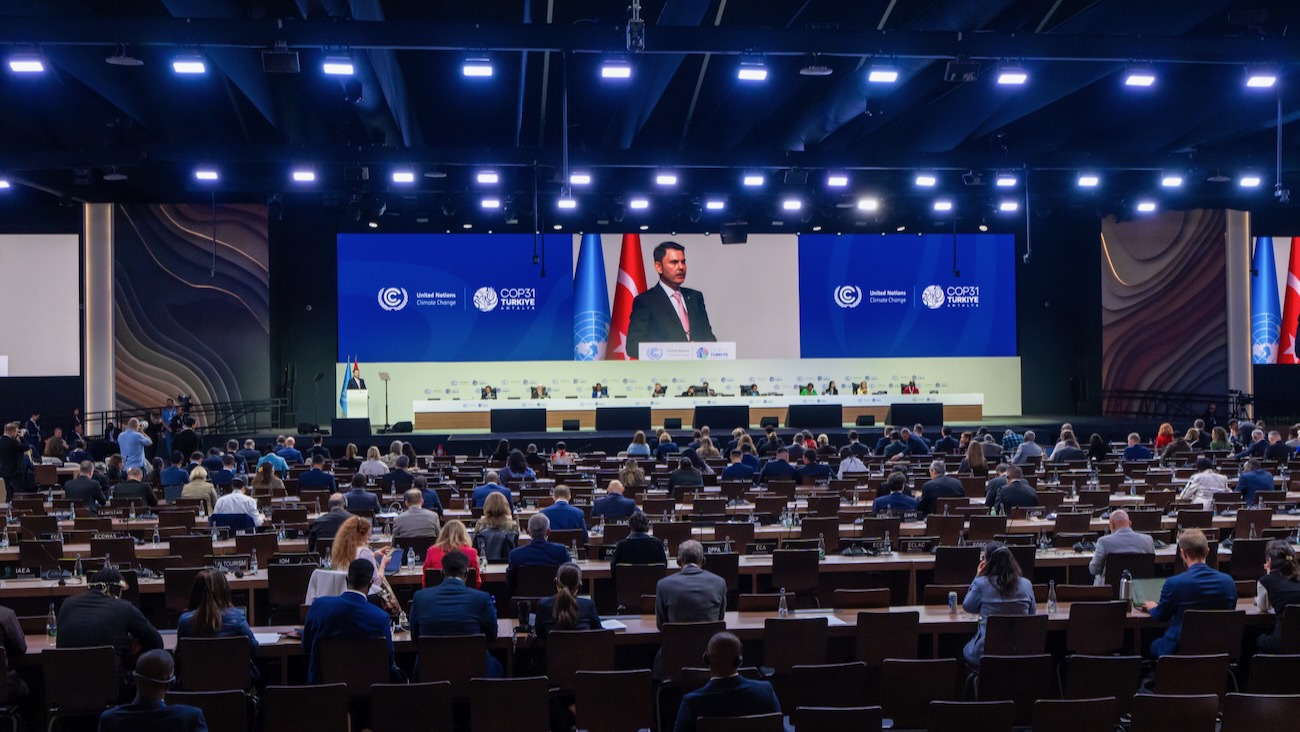
East Africa has arrived at COP31 in considerable numbers. Uganda, Tanzania and Kenya have collectively registered 1,579 delegates for the United Nations climate summit in Antalya, Türkiye, making the region one of the most visible blocs at the conference.
According to provisional accreditation figures, Uganda leads the East African contingent with 627 delegates, followed by Tanzania with 524 and Kenya with 428.
Uganda’s presence is particularly striking. Its delegation ranks seventh globally, ahead of several industrialised economies, including Italy and Japan. Kenya ranks 19th.
Those figures will inevitably attract attention. But the more important question is what East Africa intends to do with such a significant presence.
Climate conferences are not attendance competitions. They are negotiating arenas where influence is measured not by the size of a delegation, but by its ability to secure finance, shape outcomes and build partnerships that produce results beyond the conference halls.
That matters for a region already living with the consequences of climate change.
Across East Africa, prolonged droughts, destructive floods and increasingly unpredictable rainfall are affecting agricultural production, water resources, infrastructure and livelihoods. These are no longer future risks. They are present-day economic and development challenges.
Against that backdrop, climate finance remains one of the region’s most important priorities.
Speaking with one voice
Ahead of COP31, East African Community partner states agreed on a common regional position calling for more predictable, accessible and grant-based climate finance.
The position urges developed countries to honour climate finance commitments, increase adaptation funding and improve direct access to climate funds. It also calls for stronger support to address loss and damage without adding to the debt burden of vulnerable countries.
It is a practical agenda rooted in realities facing many African governments.
Yet agreeing on a common position is only the first step.
The real test is whether East African countries can convert common priorities into collective negotiating influence. Climate diplomacy often rewards coalitions that speak consistently and strategically. Fragmented national positions pursuing similar objectives risk diluting leverage.
Beyond the numbers
Large delegations can provide genuine advantages.
Climate negotiations are complex and highly technical. Multiple discussions on finance, adaptation, mitigation, carbon markets, transparency and implementation often take place simultaneously. Broader delegations allow countries to engage in more negotiating tracks, strengthen technical representation and hold more conversations with development partners and investors.
Kenya’s delegation, for example, includes government officials alongside representatives from civil society, the private sector and the media. Climate Envoy Ambassador Ali Mohammed has highlighted the diversity of the country’s participation, while Environment Cabinet Secretary Deborah Barasa has underscored the importance of securing value from the resources invested in attendance.
But numbers alone do not guarantee outcomes.
A large delegation does not automatically translate into climate finance. It does not automatically produce stronger partnerships. Nor does it necessarily result in greater negotiating influence.
Ultimately, success will depend on what East African countries can achieve collectively and individually during and after the negotiations.
The opportunity for East Africa
There is a compelling case for greater regional coordination.
East African countries share river basins, ecosystems, agricultural markets and climate risks. Drought in one part of the region can affect food systems elsewhere. Floods, water stress and environmental degradation often transcend national boundaries.
These shared vulnerabilities create an equally strong case for shared financing priorities and coordinated climate action.
The presence of 1,579 delegates from Uganda, Tanzania and Kenya alone demonstrates that East Africa is no longer a peripheral participant in global climate discussions.
The challenge now is turning visibility into influence.
Because when COP31 concludes, attention will quickly shift from who attended to what was achieved.
Did the region strengthen its access to climate finance? Did it secure partnerships that support adaptation and resilience? Did it advance the interests of communities facing growing climate pressures?
Those are the questions that matter.
The legacy of East Africa’s presence at COP31 will not be measured by accreditation figures or delegation rankings. It will be measured by whether farmers become more resilient to drought, whether vulnerable communities gain greater protection from climate shocks and whether climate finance reaches the people and projects that need it most.