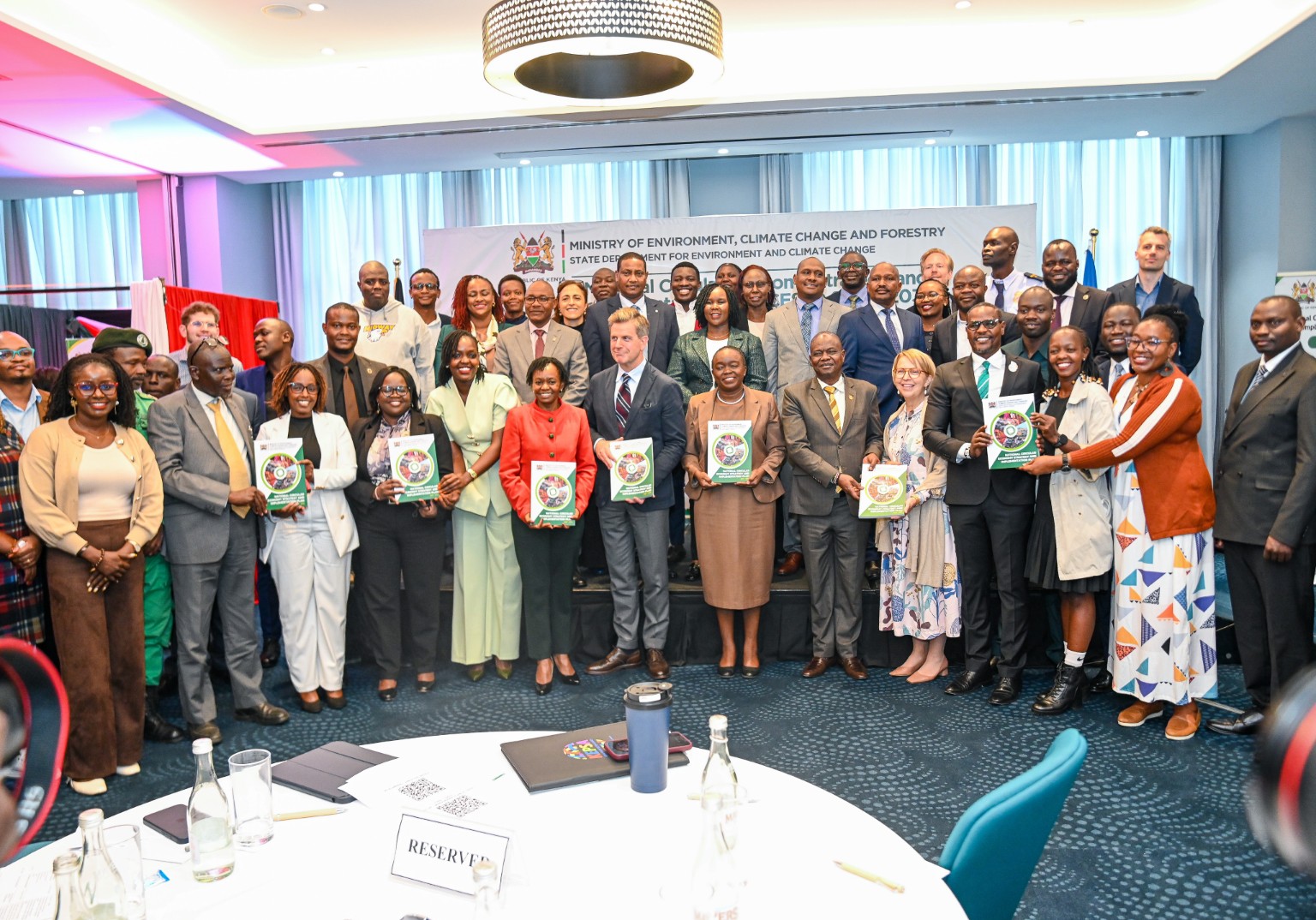
Kenya’s newly launched Sh45.4 billion National Circular Economy Strategy and Implementation Plan (CESIP) 2027–2032 presents an attractive vision: transform waste into wealth, create jobs, attract investment and reduce environmental degradation. Few would disagree with those objectives. The challenge, however, lies not in defining the vision but in making the economics work.
Launched on November 24 by the Ministry of Environment, Climate Change and Forestry, the strategy identifies five priority sectors: agriculture and food systems, plastics and packaging, electrical and electronic equipment, textiles and apparel, and mining, quarrying and construction.
The government estimates that these sectors could unlock more than US$700 million in investment and market opportunities and contribute approximately 0.5 per cent to Kenya’s GDP by 2030.
For years, waste management has largely been approached as a public service challenge. The circular economy reframes it as an economic opportunity.
Instead of extracting resources, using them and discarding them, the model seeks to keep materials in productive use through reuse, recycling, refurbishment and recovery. In theory, this reduces pressure on natural resources while creating new industries and income streams.
Kenya certainly has the raw material. The country generates thousands of tonnes of waste daily, much of which remains uncollected or improperly managed.
Plastics, agricultural residues, electronic equipment and construction debris often end up in dumpsites despite retaining significant economic value. The existence of waste is therefore not the problem. The problem is the absence of systems and markets capable of converting it into commercially viable products.
That is where the conversation must shift. The success of the circular economy will not be determined by the volume of waste collected but by whether investors can build sustainable businesses around that waste.
Recycling plants, resource recovery facilities and refurbishment enterprises require capital, technology and predictable demand. Without buyers for recycled materials, even the best waste collection systems will struggle to remain viable.
The financing challenge is already apparent. CESIP estimates an implementation requirement of Sh45.4 billion, with Sh10.9 billion still to be mobilised. The projected investment opportunities are significant, but translating them into actual investment will require bankable projects and clear incentives for businesses.
The private sector will therefore play a decisive role. Government can create policies, establish standards and provide incentives, but businesses must ultimately identify market opportunities and develop profitable models. Investors will not commit billions simply because a strategy document exists. They will invest when they see clear pathways to returns.
Equally important is the integration of informal waste workers. Formalising and certifying their work can improve incomes and working conditions while strengthening material recovery value chains. CESIP targets certification of 15,000 informal waste-sector workers by 2032.
County governments also face a critical responsibility. Effective waste management infrastructure is established locally, not nationally. Counties that prepare investment-ready projects and support modern collection and processing systems are likely to become important drivers of the transition.
Ultimately, Kenya’s circular economy strategy will succeed not because it promises to turn waste into wealth, but because it proves that waste can become a profitable business. Policy ambition is important. Commercial viability is what will determine whether the vision becomes reality.