Africa’s AI infrastructure boom comes with an environmental price tag
Africa wants a stake in the AI economy. Across the continent, governments are competing to attract the data centres, cloud facilities and computing infrastructure needed to power artificial intelligence. But while discussions often focus on investment and innovation, far less attention is being paid to a critical question: what will AI infrastructure cost in electricity, water and other natural resources?
The issue is becoming increasingly important as countries such as Kenya, South Africa and Nigeria position themselves as regional digital hubs. Data centres promise investment, jobs and stronger digital infrastructure. Yet they also introduce a new source of industrial demand into countries that continue to grapple with electricity shortages, water stress and infrastructure financing challenges.
The International Energy Agency projects that global data-centre electricity consumption could almost double by 2030, driven largely by artificial intelligence. While Africa currently accounts for a relatively small share of global computing infrastructure, the continent’s ambitions suggest that demand for energy-intensive facilities will grow rapidly.
For countries with constrained electricity systems, the challenge is not simply attracting investment. It is ensuring that new demand does not undermine energy access, increase dependence on fossil fuels or place additional pressure on already stretched grids.
Kenya offers a glimpse of both the opportunity and the challenge. Its geothermal resources provide a relatively low-carbon source of electricity that could make the country attractive to AI and cloud-computing investors. However, renewable energy alone does not resolve every sustainability concern.
Water is another critical but often overlooked consideration.
Data centres require cooling systems to prevent servers from overheating. Depending on the technology used, this process can consume significant amounts of water. In regions where communities, agriculture and industry already compete for limited resources, the implications deserve closer scrutiny.
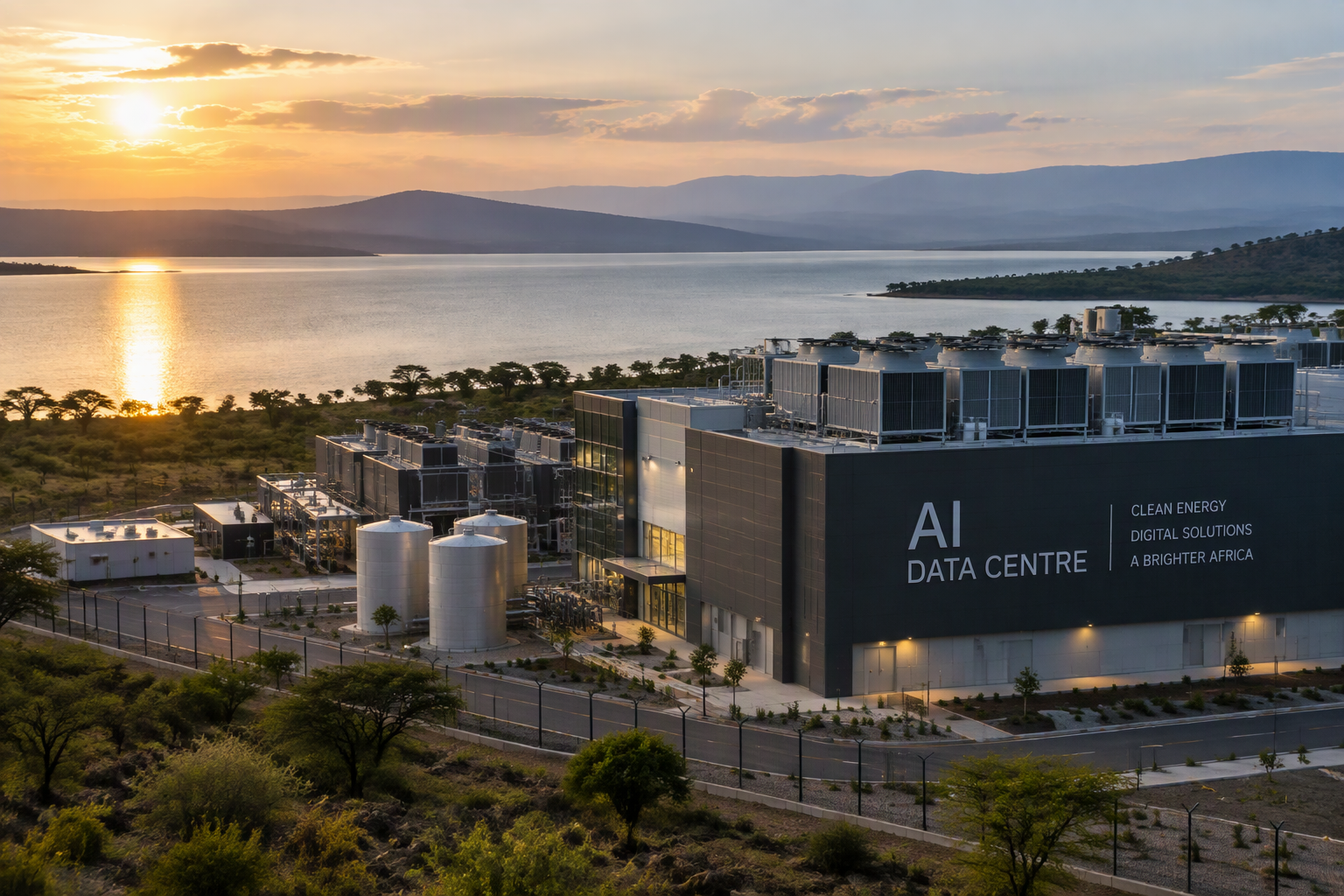
This debate is particularly relevant to the proposed Microsoft-G42 data-centre campus in Olkaria, announced in 2024 as part of a wider US$1 billion digital investment initiative. The project has been promoted as a renewable-energy-powered facility that could strengthen Kenya’s position as a regional technology hub.
Yet important questions remain. How much water will the facility require? Where will that water come from? And how will its resource demands affect the wider Naivasha basin, which already supports agriculture, tourism, livestock and local communities?
These are not arguments against data-centre investment. They are questions that should be answered before construction, not after operations begin.
Africa’s digital future and its sustainability ambitions do not have to be in conflict. However, governments must ensure that AI infrastructure is developed responsibly. That means requiring transparency on energy and water consumption, encouraging efficient cooling technologies, supporting additional renewable-energy generation and ensuring local communities are part of the conversation.
As the race to attract AI infrastructure accelerates, success should not be measured solely by the number of investors a country attracts. It should be measured by whether digital growth strengthens economic resilience without compromising the natural resources on which that growth ultimately depends.