
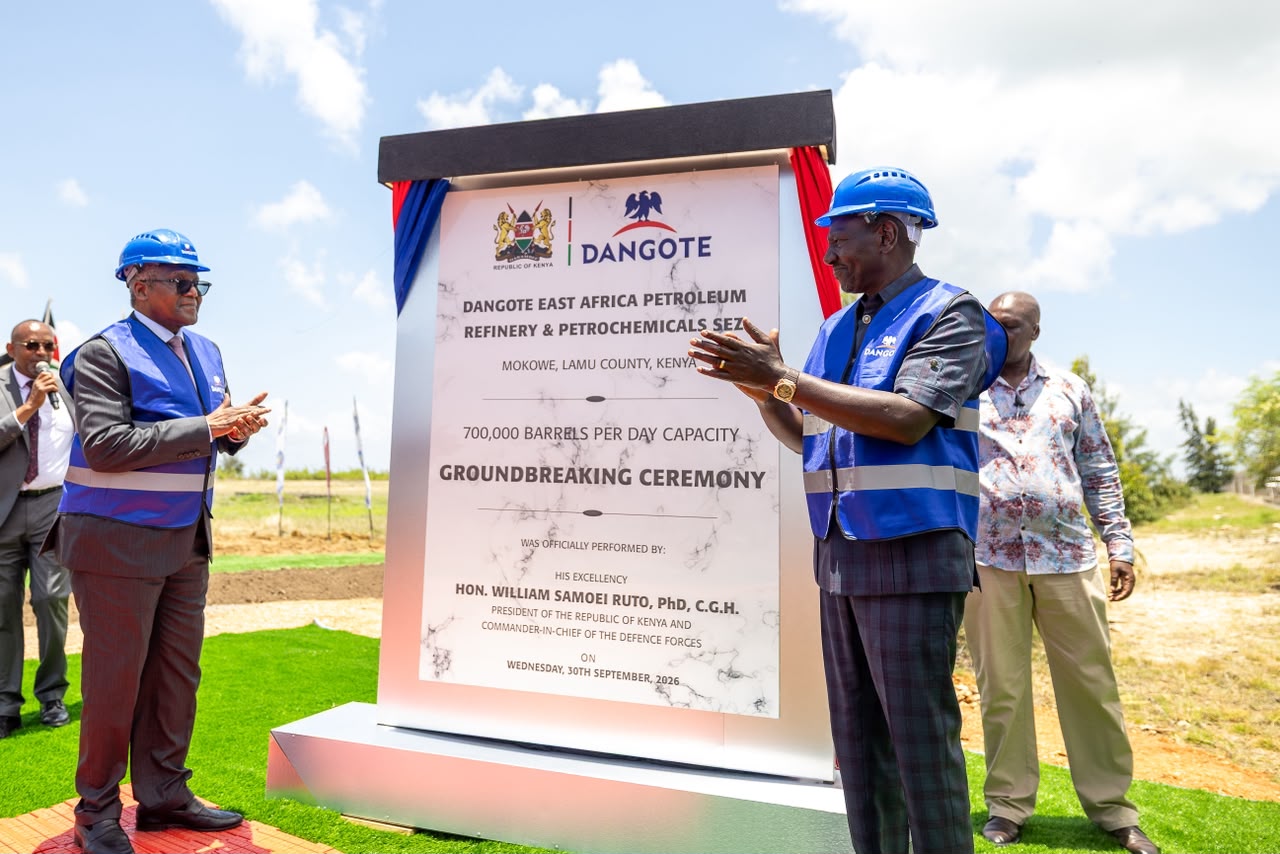

The Dangote East African Refinery is a major project with great potential. From the onset, the idea of a major undertaking at Lamu, on the Kenyan coast brought excitement, hope and a promise of a greater economic impact opening up Lamu for trade from within East Africa’s hinterland to the world.
With the political excitement and dust settling down after the launch presided by Kenya’s President William Ruto, several heads of states and government from the region, and the billionaire mastermind Aliko Dangote, questions are now being asked about whether the project got it right on the environmental front.
Kenya has prided itself as a country that has sound environmental legislations incorporated in the national constitution as well as follow-up laws that ensure sustainable investments that guarantee not just current wealth, but that of future generations.
A 700,000-barrel-a-day refinery is not simply another industrial building. The proposed Lamu development is expected to include a refinery, a 1,000MW power plant and associated petrochemical and chemical facilities, with an estimated investment of about $16 billion.
That makes the regulatory paper trail almost as important as the investment headline. And the idea of the project evolved fast. From Tanga, to Mombasa and to Lamu, within a very short period.
Let us explore the necessary steps required for such a facility to commence. First comes environmental assessments. For a project of such magnitude to be given the go ahead in Kenya, it requires an Environmental Impact Assessment (EIA) covering the likely effects of the proposed project on the water, soil, marine life, air quality, waste and all the biodiversity around the area.
This is guided by the Environmental Management and Coordination Act Section 58. The law in the custody of National Environmental Management Authority (NEMA), stipulates that this study must be present before any license is issued.
And there is a timeline. Section 59 of EMCA, notes that once NEMA receives an EIA study report, it is required to publish notice of the report in the Gazette, newspapers circulating in the area and on radio. The notice must allow the public a period of up to 60 days to submit oral or written comments.
The essence of a public participation is not necessarily to oppose the project. With the projected 60,000 employment opportunities at hand, local population need not to oppose the project, but they need, through written submissions to show they understand what is at stake. Their contributions might end up strengthening the project by providing vital local knowledge to spearhead the future of the project.
This leaves the public with pertinent questions regarding key sustainability issues.
Was the process followed?
When was the EIA application submitted?
When did public consultations take place?
When was the EIA license issued?
What conditions were attached if any?
Which other approvals have been obtained, and which remain outstanding?