 KCB Launches KES 300 Billion Sustainability Bond Framework, Signalling a New Era for Green Finance in East Africa
Nairobi, Kenya — August 19th, 2026
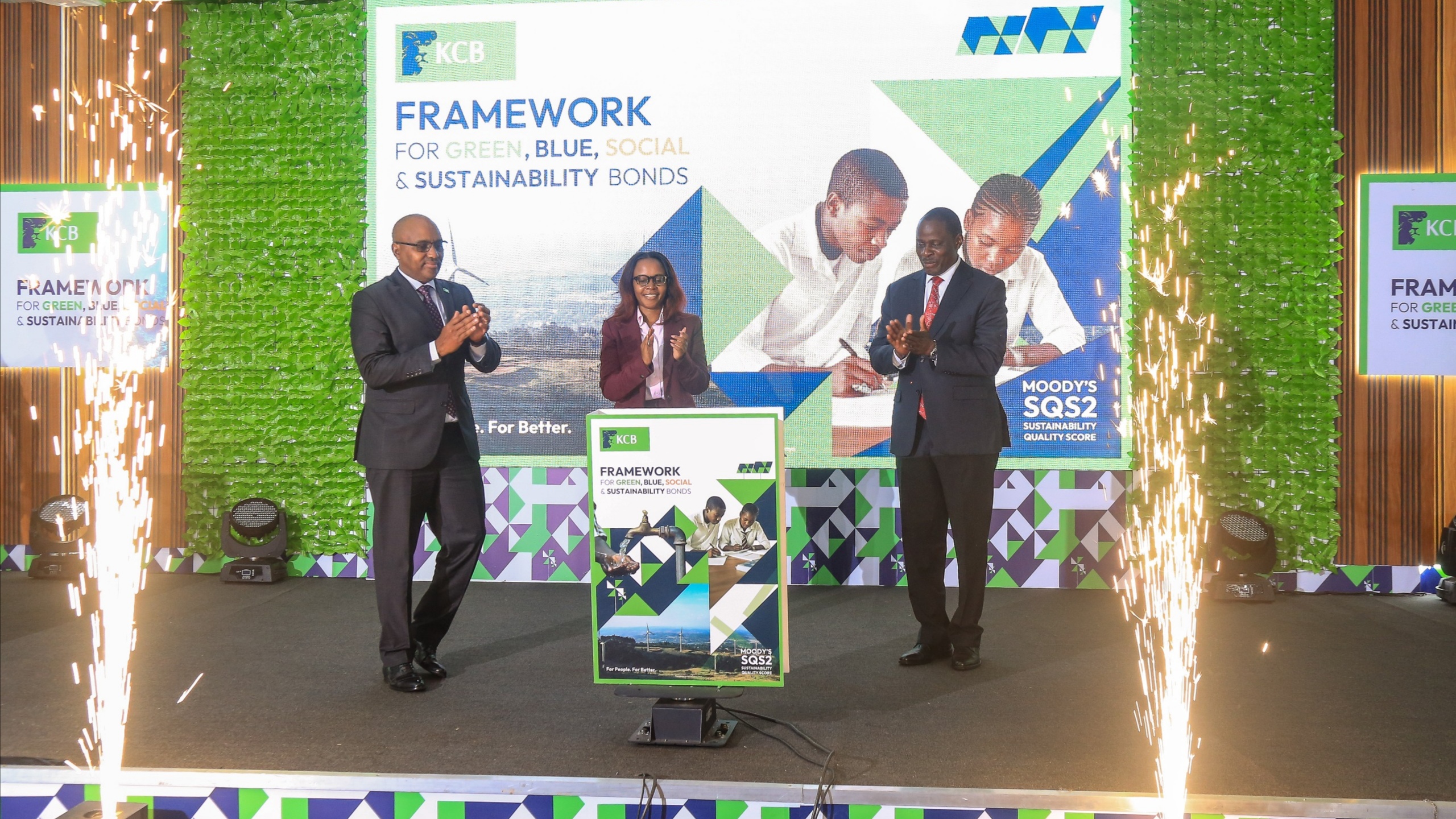
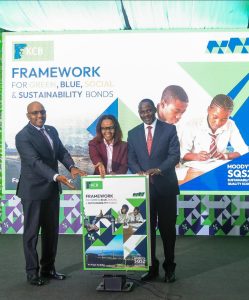
A room full of policymakers, regulators, financiers and sustainability practitioners watched as KCB Group formally launch its Sustainability Bond Framework — Use of Proceeds, a move that positions the bank to mobilise up to KES 300 billion over five years for climate, ocean and social impact projects across the region.
The launch, held during a KCB PowerTalk session, drew a high-level guest list: Principal Secretary for the State Department for Blue Economy and Fisheries Betsy Njagi, Capital Markets Authority CEO Wyckliffe Shamiah, Nairobi Securities Exchange CEO Frank Mwiti, Special Envoy for Climate Change Amb. Ali Mohammed, IFC Principal Country Officer Gillian Rogers, and Financial Sector Deepening Africa CEO Mark Napier, among others.
Addressing the gathering, KCB Group CEO Paul Russo framed the framework as more than a financial instrument. For 130 years, he said, KCB’s role has been to connect people to opportunity and businesses to capital — but the question banks must now answer is not just how much capital they mobilise, but where it goes and what it leaves behind.
That question sits at the heart of the new framework. East Africa, Russo noted, is a region of real economic promise — in infrastructure, agriculture, manufacturing, energy, housing and technology — but one still constrained by climate vulnerability, food insecurity, unemployment and limited access to long-term, affordable capital.
The Sustainability Bond Framework is KCB’s answer: a disciplined mechanism for channelling capital markets funding directly into projects with measurable environmental and social returns.
Russo traced the framework back to 2008, when KCB first anchored sustainability into its business through financial, economic, social and environmental pillars. A year later came the bank’s first Sustainability Report.
Structured as a Medium-Term Note Programme subject to regulatory approval and market conditions, the framework ring-fences funding across three categories:
Green renewable energy (including solar), energy-efficient buildings, low-emission transport, sustainable agriculture, and water and wastewater management.
Blue projects strengthening the resilience of marine, coastal and freshwater ecosystems and the communities that depend on them.
Social expanding access to essential services and economic opportunity for underserved populations, including affordable housing, MSME financing, and women- and youth-led enterprise support — building on the track record of KCB Foundation’s 2Jiajiri Initiative.
The framework was independently reviewed by Moody’s, which awarded it a Sustainability Quality Score of 2, rated “Very Good” — external validation that Russo pointed to as reinforcing KCB’s commitment to transparency and alignment with global standards.
“The framework is about bringing three things together: Capital, Purpose and Accountability,” Russo told the room, adding that the true measure of the initiative won’t be the size of the bond, but the scale of the impact it creates — in lives improved, businesses strengthened, ecosystems protected and jobs unlocked.
For the Sustainability Champions Network (SCN), the KCB launch is exactly the kind of moment its work exists to amplify — proof that sustainability is moving from policy language into real capital allocation.
As a practitioner-led ESG community SCN has spent the past year pushing East African organisations to treat sustainability disclosure and green finance not as compliance exercises, but as genuine strategy.
KCB’s framework is a case study in exactly that shift. It shows a major regional bank translating nearly two decades of sustainability commitments into a concrete, rated, capital-markets instrument — the kind of tangible proof point SCN’s members are hungry for as they build their own ESG and sustainability roadmaps.
Beyond the launch, SCN will be watching closely for:
Transparent impact reporting— how KCB tracks and discloses the real outcomes of Green, Blue and Social financing over the life of the programme.
MSME and youth access— whether the Social pillar meaningfully deepens capital access for the small businesses and women- and youth-led enterprises that make up much of East Africa’s economy.
Blue economy momentum— a rare and welcome focus on coastal and freshwater resilience, an area still underrepresented in the region’s sustainable finance conversations.
A model for other institutions — the possibility that KCB’s framework, and its “Very Good” Moody’s rating, becomes a benchmark other regional banks are encouraged to match or exceed.
As Kenya’s capital markets take on a larger role in financing the country’s climate and development agenda, SCN sees frameworks like this as the bridge its community exists to build — between government policy, financial institutions and the businesses on the ground translating capital into impact.