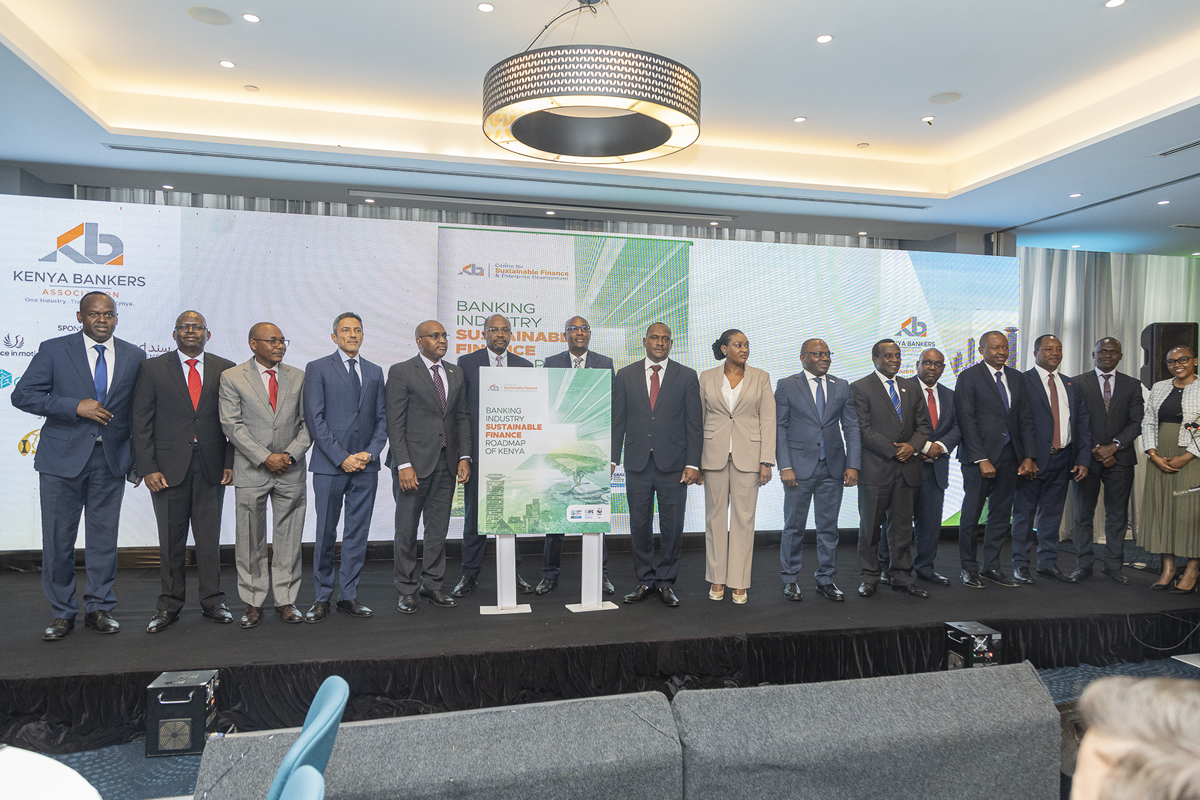
Kenya’s banking industry has launched a new roadmap to guide financial institutions in integrating climate and nature-related risks into lending decisions, strengthening sustainability disclosures and directing capital towards green investments.
The Banking Industry Sustainable Finance Roadmap, developed by the Kenya Bankers Association (KBA), through its Centre for Sustainable Finance and Enterprise Development (CSFED), in partnership with the International Finance Corporation (IFC) and WWF-Kenya, sets out an industry-wide framework for embedding sustainability into banking operations.
Launched in Nairobi on November 3, 2026, the roadmap comes as Kenya seeks to mobilise private-sector financing for climate resilience, environmental protection and inclusive economic development. It also seeks to strengthen the banking sector’s capacity to identify financial risks arising from climate change and nature loss, while expanding financing opportunities for sustainable businesses.
The framework covers five key areas: governance, risk management, lending decisions, sustainability reporting and capital allocation. Its implementation is expected to help financial institutions incorporate environmental and social considerations into their operations and financing decisions.
A particular focus is unlocking finance for green and sustainable projects and improving access to capital for enterprises, including micro, small and medium-sized enterprises (MSMEs), as they adapt to the transition towards a more resilient economy.
In remarks delivered on his behalf by National Environment Trust Fund (NETFUND) Chief Executive Officer Samson Toniok, Principal Secretary in the Ministry of Environment, Climate Change and Forestry Festus Ng’eno said the roadmap marked an important step in aligning financial sector activities with Kenya’s sustainable development and climate ambitions.
He said environmental protection needed to be considered part of economic planning rather than solely a conservation responsibility, calling for stronger collaboration between government, financial institutions, investors, businesses and development partners to direct capital towards sustainable investments.
KBA Chairman and KCB Group Chief Executive Officer Paul Russo said the roadmap would help move the industry from sustainability commitments towards practical implementation.
He said the framework was intended to consolidate existing industry initiatives and provide financial institutions with an action plan for financing green projects, managing climate and nature-related financial risks and strengthening sustainability practices.
KBA Chief Executive Officer Raimond Molenje said the roadmap brought together ongoing initiatives and provided clearer direction for scaling sustainable finance across the banking industry. He highlighted the need to integrate sustainability into institutional governance, risk management, reporting and capital allocation.
IFC Regional Director for Eastern Africa Mary Porter Peschka said the framework would support efforts to mobilise capital for sustainable development priorities. IFC partnered with KBA in developing the roadmap.
WWF-Kenya Chief Executive Officer Jackson Kiplagat said the next phase would require financial institutions to translate sustainability commitments into measurable changes in lending, investment and risk management.
He also highlighted the organisation’s support for KBA and its member banks in developing Nature Transition Plans, which are intended to help financial institutions align their activities with nature-positive outcomes.
The Banking Industry Sustainable Finance Summit 2026, where the roadmap was launched, brought together banking executives, investors, development partners, regulators and policymakers to discuss climate-risk governance, sustainability disclosures and the role of finance in supporting Kenya’s environmental and economic objectives.
The effectiveness of the roadmap will ultimately depend on how financial institutions translate its recommendations into lending policies, risk assessment systems and actual capital allocation. Its implementation will also be important in determining whether sustainable finance commitments translate into increased funding for businesses and projects delivering measurable environmental and social benefits.