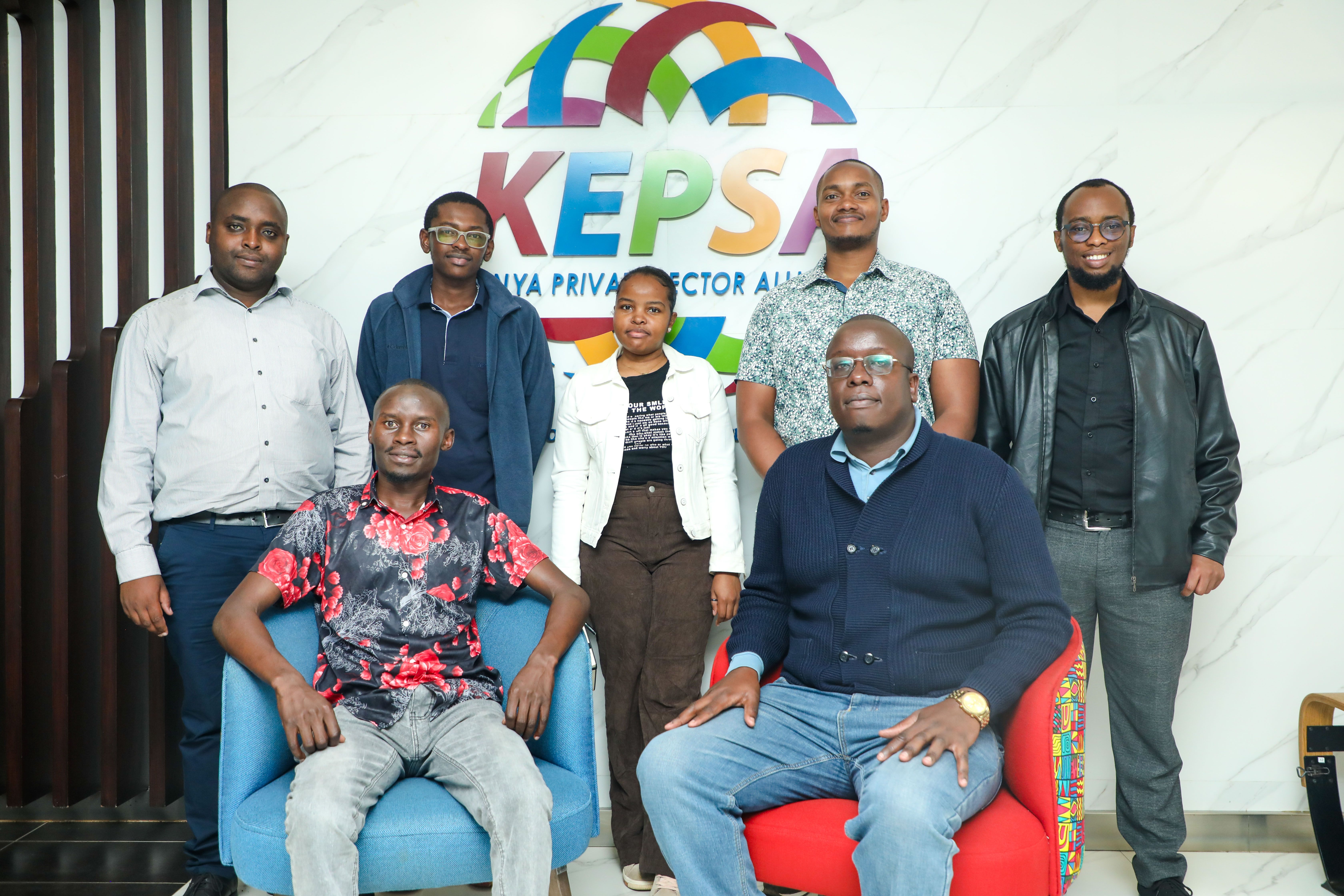
The Kenya Private Sector Alliance (KEPSA) and the ESG Education and Research Institute are exploring a partnership to strengthen environmental, social and governance (ESG) knowledge, research and implementation among Kenyan businesses, particularly micro, small and medium enterprises (MSMEs).
The discussions, held at KEPSA offices on 30 October 2026, focused on opportunities to link ESG education and research with private-sector policy advocacy, business capacity building and access to sustainable finance.
The Institute, a joint initiative of Knights and Dames Afrique International (KDAI) and the University of Nairobi, has applied for KEPSA membership. Both organisations are considering whether collaboration should proceed through membership or a memorandum of understanding.
A key issue was the growing demand for businesses to demonstrate sustainability performance, including compliance with reporting standards and the ability to trace products through supply chains.
The Institute outlined its training programmes covering Global Reporting Initiative (GRI) standards, International Financial Reporting Standards (IFRS), the Central Bank of Kenya’s taxonomy, and ESG and sustainability. It also plans to establish an ESG Fund to help MSMEs meeting recognised standards access sustainable capital.
The meeting also noted that ESG reporting requirements, initially concentrated in the banking sector, are increasingly extending to large corporates and eventually smaller businesses. However, many MSMEs still face knowledge, capacity and credibility gaps.
KEPSA highlighted the implications for Kenyan exporters, particularly those seeking access to markets with increasingly stringent sustainability requirements. These include the European Union’s regulatory requirements, such as the EU Deforestation Regulation, and the need for product traceability that can establish the specific batch, production date or farm section from which goods originate.
The discussions also identified opportunities for collaboration in responsible waste management, waste separation, sustainable governance and export competitiveness.
KEPSA’s Research and Thought Leadership unit explained how research informs its advocacy through the National Business Agenda, which draws on members’ experiences of the business environment. The fifth agenda will cover 2027–2032, providing an opportunity to incorporate emerging sustainability and ESG priorities into private-sector engagement with government.
KEPSA also invited the Institute to review and contribute to the draft Circular Economy Strategy and Implementation Plan. The two organisations discussed further engagement with KEPSA’s SME programmes and foundation, as well as opportunities to bring members together in project consortia.
Separately, the Institute invited KEPSA to participate in Kenya’s first International ESG Day, scheduled for 30 November 2026 at the University of Nairobi’s Loreto, Lower Kabete campus. The event will include a collaborative tree-planting initiative linked to the rehabilitation of approximately 1,000 acres of land.
The proposed collaboration comes as sustainability reporting, supply-chain transparency and access to sustainable finance become increasingly relevant to the competitiveness of Kenyan businesses.